
Hi, I'm Oliver Scott, and I call Texas home. Craig "The Water Guy" Phillips reached out asking if I'd share my real-world experience with the SoftPro ECO™ City Water Softener - Best Water Softener Systems for City Water that I installed in my home. I'm happy to tell you how this whole journey unfolded, and I genuinely hope my experience helps guide your decision-making process.
The Hard Water Problem That Started Everything
Did you know that hard water affects over 85% of American households?
I certainly didn't realize the extent of my problem until it started costing me serious money. Living in Texas, our municipal water supply delivers what I now know is extremely hard water – around 18 grains per gallon of dissolved calcium and magnesium minerals.
The first wake-up call came when my water heater failed after only six years. The technician who replaced it showed me the mineral buildup inside – it looked like concrete had been poured into the tank. That $1,200 replacement cost stung, but what really got my attention was when he said this would keep happening every few years unless I addressed the hard water.
Beyond the appliance damage, daily life was becoming frustrating. My wife complained constantly about soap scum in the shower that required industrial-strength cleaners to remove. Our glassware came out of the dishwasher looking cloudy and spotted, no matter what detergent we used. Even our clothes felt stiff and looked dingy after washing.
I started calculating the hidden costs: extra cleaning products, increased detergent usage, frequent appliance repairs, and the time spent scrubbing mineral deposits. The annual impact was approaching $800, not counting major appliance replacements.
Research Phase - Learning What I Actually Needed
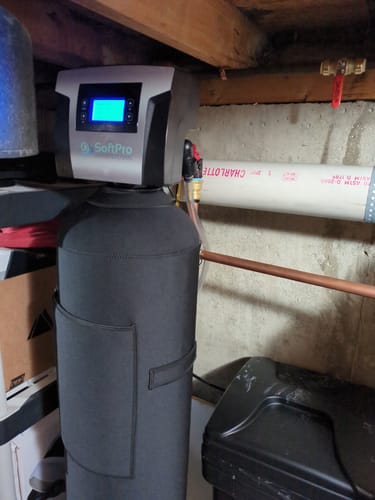
Like most homeowners, I initially thought all water softeners were basically the same. Boy, was I wrong. After diving into research, I discovered there are significant differences in technology, efficiency, and long-term costs.
I learned that ion exchange is the gold standard for removing hardness minerals. Salt-based systems like the SoftPro ECO use specialized resin beads that attract calcium and magnesium ions, swapping them for sodium ions. This process effectively eliminates the minerals that cause scale buildup and soap interference.
Salt-free systems, I discovered, don't actually remove hardness minerals – they claim to "condition" water by changing the structure of minerals. While this sounds appealing, the science seemed questionable, and most independent testing showed limited effectiveness for severe hardness levels like ours.

Capacity became a crucial factor. With four people in our household and 18-grain hardness, I calculated we needed a system capable of handling approximately 3,200 grains per day. The SoftPro ECO's 48,000-grain capacity meant regeneration every 10-12 days under normal usage – a sweet spot for efficiency.
What really impressed me about SoftPro was their focus on efficiency. Their Vortech tank design and precision brining system promised to use 50% less salt and water during regeneration compared to conventional softeners. Given Texas water restrictions and my environmental concerns, this efficiency advantage was significant.
Why I Chose the SoftPro ECO
Several factors made the SoftPro ECO stand out from competitors. First, the build quality was immediately apparent – this isn't a plastic box from a big-box store. The Vortech mineral tank uses advanced flow distribution that maximizes contact between water and resin while minimizing channeling.
The Fleck 5600SXT control valve sealed the deal for me. This isn't proprietary technology that locks me into expensive service calls – it's an industry-standard valve that any qualified technician can service. The electronic controls offer precise regeneration timing based on actual usage rather than arbitrary time intervals.
SoftPro's certification credentials impressed me as well. The system carries NSF/ANSI 44 certification for performance claims and NSF/ANSI 372 certification for lead-free compliance. These aren't marketing terms – they're rigorous third-party validations of safety and effectiveness.
The 10-year warranty on tanks and 5-year warranty on electronics provided confidence in long-term reliability. Many competitors offer shorter coverage periods or exclude key components from warranty protection.
Price-wise, the SoftPro ECO fell into the premium category but wasn't the most expensive option. When I calculated cost per grain of capacity and factored in the efficiency advantages, the long-term value proposition made sense.
Installation and First Impressions

I opted for professional installation, which proved wise given the plumbing modifications required. The installer arrived with the system and immediately commented on the build quality – apparently, he sees many different brands and was impressed with SoftPro's construction.
Installation took about four hours, including tying into our main water line, installing a bypass valve system, connecting the drain line, and setting up the salt storage tank. The unit required a dedicated 110V outlet, which we already had in our utility room.
The physical footprint was smaller than expected. The Vortech tank measures 10 inches in diameter and stands about 54 inches tall, while the salt tank takes up roughly 18 inches square of floor space. Everything fit comfortably in our utility room with adequate clearance for maintenance.
During startup, the installer walked me through the programming process. The Fleck control head displays are intuitive, showing current time, regeneration schedule, and system status. He programmed it for our household size, water hardness level, and iron content (we have about 0.3 PPM iron that causes staining).
The first regeneration cycle ran that evening – a process that takes about two hours and uses approximately 40 gallons of water. The sounds were noticeable but not disruptive, similar to a dishwasher running.
Performance Testing and Real-World Results
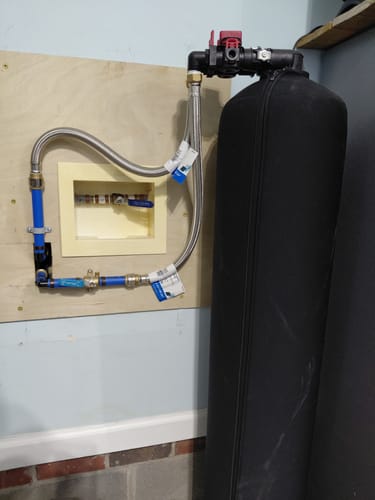
I'm a bit of a data nerd, so I invested in a TDS meter and hardness test kit to track performance objectively. Our incoming water measured 18 grains per gallon hardness and 420 PPM total dissolved solids. Post-softener readings consistently show 0-1 grains hardness and about 380 PPM TDS.
The difference in daily life became apparent within days. Soap actually lathers now – I was shocked at how little body wash and shampoo I actually needed. My wife noticed her hair felt softer and less tangled after washing. Our skin, which had always felt dry and itchy after showers, improved dramatically.
Cleaning became significantly easier. The soap scum that required weekly scrubbing virtually disappeared. Our glassware emerged from the dishwasher crystal clear without spots or cloudy film. Even our toilet bowls stayed cleaner longer without the mineral ring buildup.
After six months, I had our appliances serviced to check for improvement. The water heater showed no new mineral accumulation, and our dishwasher's spray arms remained clear – previously, I cleaned them monthly due to mineral clogging.
The iron removal capability exceeded expectations. Our white fixtures had developed orange staining over the years, which gradually faded as the softener removed iron from our water supply. New staining stopped completely.
Regeneration frequency settled into a predictable pattern. With normal usage, the best portable water softener system regenerates every 11-12 days, exactly matching the calculated schedule. During peak usage periods (holidays with guests), it adjusts automatically to regenerate more frequently.
Operating Costs and Long-Term Value
Salt consumption has been lower than expected, thanks to the efficient Vortech design. We use approximately one 40-pound bag of salt monthly, costing about $6. Previously researched conventional softeners suggested we'd need 50-60 pounds monthly.
Water usage during regeneration averages 35-40 gallons per cycle, occurring roughly 30 times annually. This adds about $25 yearly to our water bill – a fraction of what we previously spent on cleaning products and appliance repairs.
Electricity consumption is minimal. The electronic controls draw power comparable to a digital clock. Even during regeneration, the motor consumes less energy than a standard light bulb running for two hours.
Maintenance requirements have been straightforward. Beyond adding salt monthly, I clean the brine tank annually and check the bypass valve operation. The resin bed should last 10-15 years with our water quality, making replacement costs minimal over the system's lifespan.
Calculating total cost of ownership, including purchase price, installation, salt, and maintenance, the annual expense runs about $180. Compare this to our previous annual costs exceeding $800 for cleaning products, repairs, and appliance damage – the return on investment is substantial.
Unexpected Benefits and Minor Drawbacks
Several benefits surprised me. Our soap and detergent usage dropped by roughly 60%, as soft water allows these products to work at full effectiveness. Coffee and tea taste noticeably better without mineral interference. Even our plants prefer the softened water for indoor watering.
The system's reliability has been excellent. In 18 months of operation, we've experienced zero service calls or mechanical problems. The Fleck valve's reputation for dependability appears well-earned.
However, there are minor inconveniences worth mentioning. Salt bags are heavy, and our monthly delivery requires carrying them to the utility room. The regeneration cycle, while not loud, is audible throughout the house during quiet nighttime hours.
Some people dislike the slight taste difference in softened water due to increased sodium content. While minimal for most users, those on sodium-restricted diets might want to consider a reverse osmosis drinking water system as a complement.
Initial adjustment took time as we learned optimal detergent amounts. Using the same quantities as with hard water resulted in over-sudsing and required reducing soap usage by half or more.
Final Verdict and Recommendation
After 18 months of ownership, the SoftPro ECO has exceeded expectations in performance, reliability, and value. The combination of effective hardness removal, efficient operation, and solid construction makes this a standout choice for households dealing with moderate to severe hard water.
This system is perfect for homeowners who want proven technology with long-term reliability.
The Fleck control valve and Vortech tank design represent mature, well-tested technology rather than experimental approaches. If you're dealing with hard water damage to appliances and fixtures, the SoftPro ECO will solve these problems effectively.
The efficiency advantages make this especially suitable for environmentally conscious households or areas with water restrictions. Using 50% less salt and water during regeneration provides both cost savings and reduced environmental impact.
I'd recommend this system for households with moderate to high hardness levels (10 grains per gallon) and normal to high water usage. The 48,000-grain capacity handles four-person households comfortably but could accommodate larger families or small businesses.
Budget-conscious buyers should consider the total cost of ownership rather than just purchase price. While the initial investment is substantial, the combination of appliance protection, reduced cleaning costs, and efficiency savings provides strong long-term value.
Would I buy the SoftPro ECO again? Absolutely. The peace of mind knowing our appliances are protected, combined with the daily quality-of-life improvements, makes this one of the best home investments I've made. The fantastic quality and reasonable price point deliver exactly what they promise.