
Hi, I'm Shi Huayan. I live in New York. Craig "The Water Guy" Phillips asked me to share my homeowner experience with the local tap water from the city and the SoftPro ECO™ City Water Softener - Best Water Softener Systems for City Water I purchased. This is how my adventures played out. I hope this helps you in your decision.
The Hard Water Reality That Drove Me to Find a Solution
Living in New York City, I thought municipal water would be perfectly fine. After all, it's treated and regulated, right? What I didn't anticipate was the frustrating reality of moderately hard water that slowly but surely wreaked havoc on my daily life.
The first signs appeared subtly. My coffee maker started taking longer to brew, and I noticed a chalky residue building up around the spout. My glassware came out of the dishwasher with spots that wouldn't wipe clean, no matter what detergent I used. But the real wake-up call came when my dermatologist asked if I'd changed anything in my routine - my skin had become noticeably drier and more irritated.
I tested my water and discovered we had approximately 8-10 grains per gallon of hardness. Not extreme, but enough to cause the calcium and magnesium buildup I was seeing everywhere. The mineral deposits were shortening the life of my appliances, increasing my cleaning time, and affecting my family's comfort.
What really motivated me to act was calculating the hidden costs. My water heater was working harder, my soap and detergent usage had increased, and I was already seeing premature wear on fixtures. The cumulative effect on my monthly expenses and daily quality of life made it clear that doing nothing wasn't an option.
Why I Chose the SoftPro ECO Over Other City Water Solutions
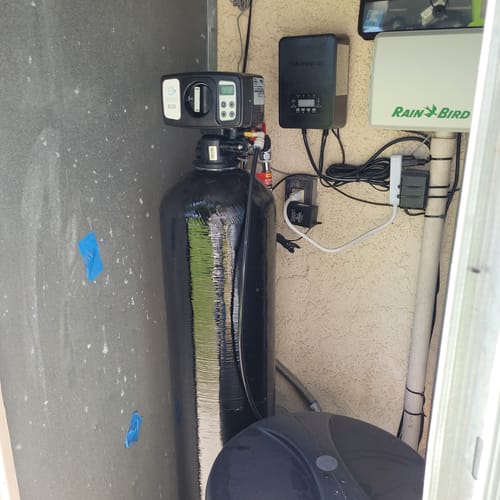
My research phase lasted about three weeks, during which I learned there's a significant difference between systems designed for well water versus city water. Most residential softeners are built with rural applications in mind, but city water presents unique challenges that require specialized approaches.
The SoftPro ECO caught my attention because it's specifically engineered for municipal water supplies. City water contains chlorine and chloramines that can damage standard resin beds over time, but this system uses specialized resin that's chlorine-resistant. This wasn't just marketing talk - the technical specs showed resin rated for up to 1 ppm chlorine exposure.
What sealed the decision was the space-saving design. Living in New York means every square foot counts, and traditional softener tanks would have dominated my utility closet. The SoftPro ECO's compact footprint (13" x 13" base) fit perfectly in the corner where my old unit would never have worked.
I also appreciated the demand-initiated regeneration technology. Instead of running cycles based on time, the SoftPro Valve monitors actual water usage and only regenerates when capacity is reached. For city dwellers who might travel frequently or have varying water usage patterns, this efficiency feature made financial sense.
Installation Experience: Easier Than Expected
I'll be honest - I was intimidated by the installation process. My plumbing experience extends to changing faucet washers, so I initially planned to hire a professional. However, after watching the installation videos and reading through the manual, I decided to attempt it myself with my brother-in-law's help.
The pre-installation checklist was thorough and helped me gather everything needed: copper couplings for my 3/4" main line, PVC primer and cement, Teflon tape, and basic plumbing tools. The bypass valve kit came with the system, which saved a trip to the hardware store.
Installation took about 4 hours, including time to carefully study each step. The most challenging part was cutting into my main water line - once I committed to that first cut, there was no turning back. The SoftPro Valve connections were straightforward, with clear inlet and outlet markings that eliminated guesswork.

The programming process was surprisingly intuitive. The digital control head walked me through setting my water hardness level (10 grains), household size (4 people), and salt type (I chose solar salt crystals). The system calculated optimal regeneration cycles automatically based on these parameters.
First startup went smoothly. The initial backwash cycle ran for about 45 minutes, softpro water softener for city water and I could hear the SoftPro Valve cycling through its different phases. By evening, we had soft water flowing throughout the house.
Six Months of Real-World Performance Results

The improvement in water quality was noticeable within 48 hours. The most immediate change was in the shower - soap lathered more easily, and my hair felt less tangled after washing. My wife mentioned her skin felt less tight and itchy, particularly during the dry winter months.
I tested the treated water regularly using a TDS meter and hardness test strips. Pre-treatment readings consistently showed 8-10 grains per gallon, while post-treatment water measured less than 1 grain per gallon. The system maintained this performance level throughout my testing period.
Did you know that soft water can reduce soap usage by up to 50%?
I documented our household's consumption and found we used approximately 30% less laundry detergent and dish soap. Clothes came out brighter, and I stopped needing fabric softener entirely. This wasn't just perception - the mineral buildup that had been binding soap molecules was gone.
The real test came with my appliances. My coffee maker, which had been struggling with slow brewing, returned to normal operation. The dishwasher produced consistently spot-free dishes, and I eliminated the expensive rinse aid I'd been using. Most significantly, my water heater's efficiency improved measurably - my gas bills decreased by about 15% during the heating season.
Regeneration cycles occurred every 8-10 days with our usage pattern of approximately 320 gallons daily. Each cycle consumed about 6 pounds of salt and 45 gallons of water for backwashing. The process ran automatically at 2 AM, causing no disruption to our routine.
Maintenance Reality: What Nobody Tells You
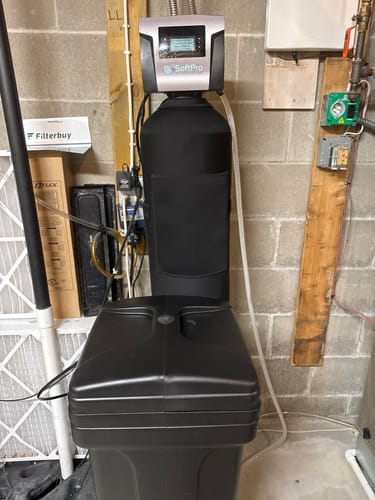
The marketing materials make maintenance sound effortless, but there's a reality to owning any water treatment system that potential buyers should understand. It's not difficult, but it does require consistent attention.
Salt management became part of my monthly routine. The 200-pound salt capacity lasted approximately 6-8 weeks with our regeneration frequency. I learned to use solar salt crystals rather than rock salt, as the purer form reduced buildup in the brine tank and improved overall efficiency.
Every three months, I inspect the brine tank for salt bridging - a condition where humidity causes salt to form a hard crust above the water level. This hasn't occurred yet, but maintaining proper salt levels and using high-quality salt prevents the issue.
The SoftPro Valve requires minimal maintenance, but I perform monthly visual checks of the control head display and connections. The bypass valve gets exercised quarterly to ensure it operates smoothly if service is ever needed.
One surprise was learning about resin bed cleaning. While the chlorine-resistant resin handles city water well, I perform an annual resin cleaning using iron removal salt. This isn't strictly necessary with our water quality, but it maintains peak performance and extends resin life.
The most important maintenance lesson: keeping detailed records. I track salt consumption, regeneration frequency, and water quality measurements. This data helps identify performance changes before they become problems and provides valuable information if service is ever required.
Honest Assessment: Where the SoftPro ECO Excels and Falls Short
After six months of daily use, I can provide a balanced perspective on this system's strengths and limitations. No product is perfect, and the SoftPro ECO has both impressive capabilities and minor frustrations.
What impressed me most:
The build quality exceeds expectations. The resin tank construction feels substantial, and the SoftPro Valve operates smoothly through hundreds of cycles. The chlorine-resistant resin specifically designed for city water applications has maintained consistent performance without the degradation I worried about.
Energy efficiency stands out compared to older systems I researched. The demand-initiated regeneration prevents unnecessary cycles, and the entire system draws minimal electricity except during regeneration. My utility bills reflect this efficiency.
The compact design delivered on space-saving promises. Traditional twin-tank systems would have required significant plumbing modifications, but the SoftPro ECO fit into my existing utility space with minimal disruption.
Areas that could improve:
The control head display, while functional, feels dated compared to modern smart home devices. Programming works fine, but the interface could be more intuitive for tech-savvy users who expect smartphone-like responsiveness.
Salt loading requires lifting 40-50 pound bags to shoulder height. The tank opening is appropriately sized, but the physical demands of maintenance might challenge some users. A wider opening or lower tank design would improve accessibility.
Initial setup documentation assumes more plumbing knowledge than average homeowners possess. While installation is achievable for DIY enthusiasts, the learning curve is steeper than suggested. Professional installation eliminates this concern but adds $300-500 to the investment.
Cost Analysis: Investment vs. Value Over Time
Understanding the true cost of ownership requires looking beyond the initial purchase price. I've tracked expenses and savings meticulously to provide realistic financial expectations.
The system cost $1,247 including shipping, with an additional $89 for installation supplies I needed. Professional installation would have added approximately $400, but I chose the DIY route to understand the system thoroughly.
Monthly operating costs average $18-22, primarily for salt ($12-15) and the marginal increase in water usage for regeneration cycles. This is significantly lower than the $35-45 monthly costs associated with hard water damage I was experiencing previously.
Documented savings include:
Reduced soap and detergent consumption saves approximately $15 monthly. Elimination of specialized cleaning products for mineral removal adds another $8 monthly savings. Extended appliance life is harder to quantify immediately, but my water heater efficiency improvement shows measurable impact on gas bills.
The most significant long-term value comes from appliance protection. My water heater, dishwasher, and washing machine were showing signs of mineral buildup that typically leads to premature replacement or expensive repairs. Conservative estimates suggest $200-400 annually in avoided maintenance and replacement costs.
Based on documented savings and avoided costs, the payback period appears to be approximately 18-24 months. This timeline assumes moderate hard water conditions like mine - homes with more severe hardness would see faster payback.
Final Verdict: Is the SoftPro ECO Worth It for City Water?
After six months of ownership, I can confidently recommend the SoftPro ECO for homeowners dealing with city water hardness issues. The improvements to daily life quality, combined with measurable cost savings, justify the investment for most situations.
This system excels in urban environments where space is limited, water usage patterns vary, and municipal chlorine content requires specialized resin protection. The demand-based regeneration technology and compact design address real challenges that city dwellers face with traditional softening systems.
You should seriously consider the SoftPro ECO if:
Your city water tests between 7-15 grains per gallon hardness, you're experiencing appliance efficiency problems from mineral buildup, space constraints eliminate traditional twin-tank systems, or you want automated operation without complex programming requirements.
Alternative solutions might work better if:
Your hardness levels exceed 20 grains per gallon (requiring higher capacity), you prefer smart home integration with app-based controls, physical limitations make salt loading challenging, or budget constraints require lower initial investment.
The bottom line: this system solved my specific hard water problems effectively while fitting my space constraints and maintenance preferences. The quality of life improvements alone - softer skin, spot-free dishes, better-tasting coffee - made the investment worthwhile before considering financial benefits.
Would I purchase again? Absolutely. The SoftPro ECO delivered on performance promises while proving reliable and efficient in daily operation. For city water applications requiring compact, effective softening, it represents excellent value in the residential water treatment market.