
Hi, I'm Owen Parker. I live in Cleveland.
Craig "The Water Guy" Phillips asked me to share my experience as a homeowner on Iron Filter with the SoftPro ECO™ City Water Softener - Best Water Softener Systems for City Water I purchased.
This is how my adventures played out. I hope this helps you in your decision.
The Hard Water Problem That Started It All
Living in Cleveland, I thought I understood what hard water meant until I moved into my current home eight months ago. The previous owners had warned me about "some mineral issues," but I figured it couldn't be that bad.
Boy, was I wrong.
Within weeks, I noticed white, chalky buildup covering every faucet and showerhead. My coffee maker started making terrible-tasting coffee, and my wife complained that her hair felt like straw after washing. The real wake-up call came when our dishwasher repairman told us the heating element was already showing significant mineral damage after just a few months of use.
Did you know that Cleveland's water hardness averages between 15-20 grains per gallon?
That's considered very hard by industry standards. I had our water tested and discovered we were dealing with 18 grains per gallon of hardness minerals, primarily calcium and magnesium carbonates.
The impact went beyond just aesthetics. We were using twice as much laundry detergent to get clothes clean, and even then, whites looked dingy. Our water heater was working overtime, driving up energy costs. I calculated we were spending an extra $40 monthly just on cleaning products and increased utility bills.
I tried those magnetic water conditioners and salt-free systems first. Neither made any noticeable difference. The buildup continued, and our appliances kept suffering. That's when I realized I needed a real ion-exchange water softener.
Why I Chose the SoftPro ECO After Extensive Research
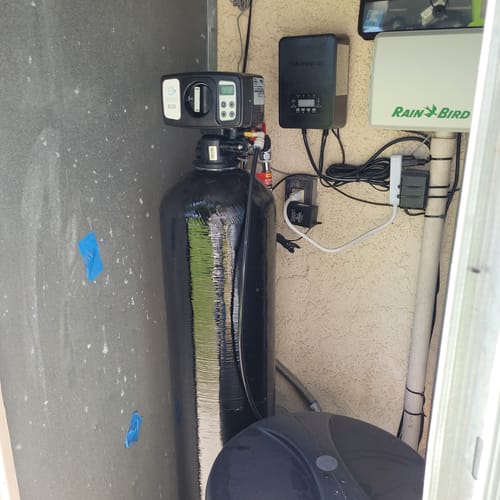
After three weeks of research, I had narrowed my options down to salt-based ion exchange systems. The technology is proven: hard water flows through resin beads that attract calcium and magnesium ions, trading them for sodium ions.
The SoftPro ECO caught my attention for several specific reasons. First, the demand-initiated regeneration system only regenerates based on actual water usage, not a preset timer. This meant potential salt and water savings compared to time-clock systems.
Second, the system's capacity matched my household perfectly. With four family members using approximately 280 gallons daily, the ECO's 48,000-grain capacity would handle our 18-grain hardness for about 10 days between regenerations.
What sealed the deal was the upflow regeneration design.
Unlike downflow systems, upflow regeneration uses 75% less salt and 65% less water during the cleaning cycle. The brine solution flows upward through the resin bed, creating more efficient contact and requiring less time and resources.
I also appreciated the high-efficiency resin media. The ECO uses premium-grade cation exchange resin with higher capacity per cubic foot than standard resins. This translates to longer service life and better performance.
The NSF certification for structural integrity and material safety provided confidence in build quality. Plus, the 10-year manufacturer warranty on the tank and 5-year warranty on the valve demonstrated the company's confidence in their product.
Unboxing and First Impressions
The SoftPro ECO arrived via freight delivery in excellent condition. The packaging was professional, with thick foam protection around the tank and separate boxing for the control valve and brine tank.
My first impression was the solid construction quality. The mineral tank is fiberglass-wrapped for durability, and the control valve felt substantial—not like the lightweight plastic valves I'd seen on cheaper units.
The brine tank included a safety float system to prevent overflow, which I appreciated given our finished basement location. All necessary fittings, bypass valve, and installation hardware were included.
The programming manual was surprisingly clear. I've dealt with confusing appliance manuals before, but SoftPro provided step-by-step setup instructions with actual photos, not just diagrams.
One pleasant surprise was the compact footprint.
Even with both tanks, the system fits in a 2x4 foot space—much smaller than I expected for a whole-house softener.
Installation Experience and Setup Process

I chose professional installation through a local plumber, costing $320. While the system is designed for DIY installation, I wanted proper copper connections and preferred having a professional handle the main water line.
The installation took about three hours. The most time-consuming part was installing the bypass valve and connecting the drain line for regeneration discharge. Our installer appreciated the pre-assembled valve head and color-coded connections.

Initial programming was straightforward.
I entered our water hardness level (18 grains), household size (4 people), and preferred regeneration time (2 AM). The ECO automatically calculates optimal regeneration frequency based on these parameters.
The system requires a 1-inch main water line and 110V electrical connection. Our basement setup was ideal, with easy access to the main line near the water heater.
First startup involved flushing the system and running an initial regeneration cycle. The process was quiet—much quieter than I expected. The only sound during operation is a subtle hum from the motor during regeneration.
We waited 24 hours before testing the softened water to allow complete system conditioning. The installer tested water hardness immediately post-installation, confirming 0 grains hardness throughout the house.
Performance Testing and Real-World Results
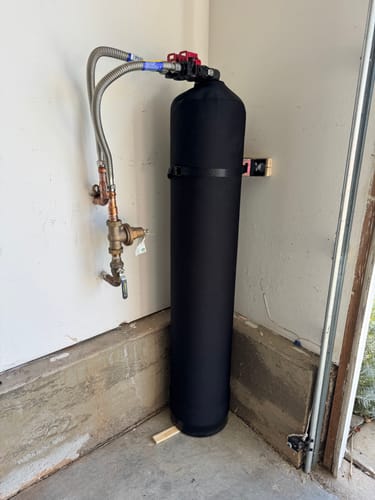
After eight months of daily use, I can provide detailed performance data based on regular testing and careful observation.
Water Hardness Reduction:
Using both test strips and a digital TDS meter, I consistently measure 0-1 grains per gallon hardness in our treated water. The incoming city water fluctuates between 17-19 grains depending on seasonal conditions, but the ECO handles these variations without adjustment.
Regeneration Efficiency:
The system regenerates every 9-11 days, depending on our usage patterns. During summer months with increased laundry and outdoor activities, it might cycle every 8 days. In winter, we sometimes get 12 days between cycles.
Each regeneration uses approximately 7 pounds of salt and 65 gallons of water. This is significantly less than the 15 pounds used by my neighbor's timer-based system.
Soap and Detergent Usage:

We immediately cut laundry detergent usage by 60%. Previously, we used 3 full caps of liquid detergent per load; now 1 cap provides better cleaning results. Dish soap lathers extensively—almost too much initially.
Appliance Protection:
No mineral buildup has appeared on any fixtures or appliances since installation. Our dishwasher produces spot-free dishes without rinse aid. The coffee maker hasn't required descaling once—previously a monthly necessity.
Water Heater Efficiency:
Our energy bills dropped approximately $25 monthly. The water heater no longer battles mineral scale buildup, allowing more efficient heat transfer.
Daily Living Impact and Household Benefits
The transformation in daily water experiences has been remarkable. My wife immediately noticed softer skin and manageable hair after showers. Previously, she needed heavy moisturizers; now regular lotion suffices.
Laundry results improved dramatically.
Whites stay bright, colors remain vibrant, and clothes feel softer without fabric softener. We eliminated fabric softener entirely, saving $8 monthly and reducing chemical exposure.
Cleaning became significantly easier. Bathroom surfaces rinse clean without scrubbing. Shower doors maintain clarity with minimal maintenance. Faucets and fixtures stay spotless with quick wiping.
Our teenagers notice the difference in shower quality. No more complaints about "sticky" feeling water or difficulty rinsing shampoo completely.
Kitchen benefits extend beyond drinking water.
Pasta and rice cook better in soft water. Tea and coffee taste noticeably cleaner. Ice cubes are crystal clear instead of cloudy. Vegetables retain better color when steamed.
Unexpected benefits include longer-lasting cleaning supplies. Soap bars last twice as long, and shampoo bottles stretch further due to improved lathering efficiency.
Guests consistently comment on water quality, especially when showering. Several neighbors have asked about our system after visiting.
Operating Costs and Maintenance Experience
Monthly operational costs average $12-15, primarily for salt purchases. I buy 40-pound bags of solar salt crystals for approximately $5 each. Each bag lasts about 6 weeks with our usage pattern.
Water costs for regeneration add roughly $8 monthly to our utility bill.
Electricity consumption is minimal—the control valve uses about the same power as a digital alarm clock. I estimate $2-3 monthly electrical cost.
Maintenance requirements are genuinely minimal. Every 2-3 months, I check salt levels and add bags as needed. The brine tank requires annual cleaning to prevent salt bridging, taking about 30 minutes.
I replaced the pre-filter after 6 months as recommended. The $15 filter cartridge installation took 10 minutes with basic tools.
Long-term cost comparison shows significant savings.
Reduced cleaning product usage saves $25 monthly. Lower energy bills save another $25. Even accounting for operational costs, we net $25 monthly savings.
The system pays for itself through operational savings in approximately 4-5 years, not including appliance protection value and improved quality of life.
Final Assessment and Honest Recommendation
After eight months of daily use, the SoftPro ECO has exceeded my expectations in performance and efficiency. The system delivers consistent, reliable water softening while minimizing salt and water consumption.
Key strengths include exceptional build quality, efficient operation, and user-friendly controls.
The demand-initiated regeneration saves money compared to timer-based systems. The upflow design reduces waste while maintaining excellent performance. Programming simplicity means anyone can operate and maintain the system.
Minor limitations include the need for regular salt monitoring and annual tank cleaning. The initial investment is significant, though operational savings offset costs over time.
This system excels for families dealing with moderate to severe hard water issues who want efficient, reliable softening without excessive maintenance.
I would confidently recommend the SoftPro ECO to neighbors and friends facing similar water quality challenges. The performance justifies the investment, and the efficiency reduces https://www.softprowatersystems.com/products/softpro-eco-water-softener long-term operational costs.
For Cleveland residents specifically, this system handles our challenging water conditions exceptionally well. The 18-20 grain hardness that damages appliances and frustrates households becomes completely manageable.
Eight months later, I'm completely satisfied with this purchase and would choose the SoftPro ECO again without hesitation.