
Hi, I'm Nolan Warren. I live in Tampa.
Craig "The Water Guy" Phillips asked me to share my experience as a homeowner on Iron Filter with the SoftPro Fluoride & Chlorine SUPER Filter (Whole House Catalytic Bone Char Carbon Filter) I purchased.
This is how my adventures played out. I hope this helps you in your decision.
If you're reading this, you're probably dealing with the same water quality nightmare that kept me up at night for months. The metallic taste in my morning coffee, the chlorine smell that followed me out of every shower, and the nagging worry about what my family was actually drinking and bathing in daily.
After six months of living with the SoftPro Fluoride & Chlorine SUPER Filter, I'm ready to share the complete truth about this investment—the impressive results, the unexpected challenges, and whether it's worth the significant upfront cost.
Did you know that Tampa's municipal water contains an average of 0.7 ppm fluoride and 2.5 ppm chlorine?
I certainly didn't until I started researching whole-house filtration systems. What began as a simple quest to improve our drinking water quality turned into a deep dive into water chemistry, filtration technologies, and the surprising complexity of treating multiple contaminants simultaneously.
The Water Quality Problems That Started It All
Living in Tampa, I thought our water quality issues were just "part of life" until they started affecting everything from our health to our household appliances. The problems weren't dramatic—no rusty orange water or sulfur smells—but the cumulative effect was impossible to ignore.
Every morning, my coffee tasted like I'd brewed it with pool water. The chlorine odor was so strong that guests would comment on it within minutes of entering our home. My wife developed persistent skin irritation that seemed to worsen after showers, and our 8-year-old daughter refused to drink tap water, insisting it "tasted yucky."
But the health concerns weren't my only motivation. I started noticing white buildup inside our dishwasher, despite using rinse aids religiously. Our water heater was making strange noises, and when I had it serviced, the technician showed me significant mineral accumulation on the heating elements.
What really pushed me over the edge was discovering that Tampa's water treatment plant uses chloramines—a combination of chlorine and ammonia—which are much harder to filter than standard chlorine.
Traditional carbon filters barely touch chloramines, and I realized that the basic Brita pitcher I'd been relying on was essentially useless against our primary water quality issues.
I tested our incoming water with a comprehensive TDS meter and chlorine test kit. The results were eye-opening: 340 TDS (total dissolved solids), 2.3 ppm total chlorine, and 0.6 ppm fluoride. While these levels fall within EPA guidelines, they explained everything we were experiencing.
Why I Chose This Specific Filtration Technology
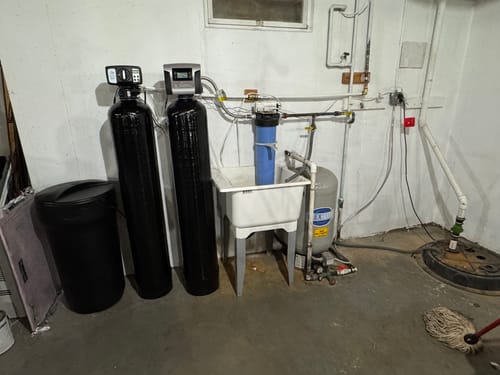
After three weeks of obsessive research, I'd learned more about water chemistry than I ever wanted to know. I compared reverse osmosis systems, traditional carbon filters, and various whole-house solutions, but kept running into the same problem: most systems excel at removing one or two contaminants but struggle with comprehensive treatment.
The SoftPro Fluoride & Chlorine SUPER Filter caught my attention because of its dual-media approach. The catalytic carbon specifically targets chloramines (which Tampa uses instead of simple chlorine), while the bone char carbon addresses fluoride—something most carbon systems can't touch effectively.
What sealed the deal was understanding the science behind catalytic carbon versus regular activated carbon.
Catalytic carbon has been specially treated to enhance its ability to break down chloramines through a chemical reaction, rather than just absorption. This means longer filter life and more consistent performance as the media ages.
The bone char component was equally important for our situation. Fluoride removal requires either bone char, activated alumina, or reverse osmosis. Since I wanted to maintain water pressure and avoid the waste water associated with RO systems, bone char became the logical choice.
I also appreciated that this system doesn't require electricity, salt, or complicated maintenance schedules. The upfront cost was substantial—$1,847 including shipping—but the operational simplicity appealed to me after reading horror stories about high-maintenance systems.
Unboxing and Initial Setup Experience
The system arrived in two separate boxes after a 10-day shipping delay (apparently bone char media requires special handling). The main filter housing was impressively heavy—about 65 pounds—and constructed from what appeared to be high-quality polypropylene with brass fittings.
Opening the boxes revealed meticulous packaging. Each component was individually wrapped, and the bone char media came sealed in food-grade bags with desiccant packets. The instruction manual was thorough, though fluoride filtration systems comparison somewhat technical for the average homeowner.
What surprised me was the size. Despite researching the dimensions (20" x 54"), seeing it in person made me realize this wasn't going to fit in the utility closet as planned. The system required a dedicated corner of our garage, with adequate clearance for future media replacement.
The build quality exceeded my expectations.
The valve head felt substantial, with clear markings for service positions and inlet/outlet connections. The pressure gauge was large enough to read easily, and all fittings appeared to be commercial grade rather than residential plastic components I'd seen on cheaper systems.
Installation Challenges and Professional Help

I consider myself reasonably handy, but this installation pushed my comfort zone. The system requires a bypass valve installation, pressure relief considerations, and precise plumbing that I wasn't confident tackling alone.
After getting quotes from three local plumbers, I chose a water treatment specialist who charged $385 for the installation. In retrospect, this was money well spent. The installation took four hours and required relocating our main water shutoff valve to accommodate the bypass system.
The plumber explained that the catalytic carbon requires specific flow rates to function optimally. Too fast, and the chloramine contact time is insufficient. Too slow, and you lose pressure throughout the house. He installed a flow restrictor to maintain the optimal 7-9 GPM flow rate for our household size.
One challenge we didn't anticipate was the initial startup procedure.
The bone char media required a 20-minute backwash cycle to remove fine particles, followed by a 30-minute forward flush. During this process, our water had a slight grayish tint—normal according to the instructions, but alarming when you're not expecting it.
The system also required a 24-hour "settling" period before the catalytic carbon reached full effectiveness. During this time, I could still detect faint chlorine odors, which had me second-guessing the investment until day two when the smell completely disappeared.
Performance Testing and Measurable Results
I'm a data person, so I documented everything with before-and-after testing using professional-grade test kits and a calibrated TDS meter. The results were more impressive than I'd dared to hope.
Pre-filtration readings showed 2.3 ppm total chlorine, 0.6 ppm fluoride, and 340 TDS. After two weeks of operation, post-filtration tests revealed undetectable chlorine levels (below 0.1 ppm detection threshold), fluoride reduced to 0.1 ppm, and TDS dropped to 285—a 16% reduction in total dissolved solids.
The chloramine removal was immediately obvious.
The chemical smell that had permeated our entire house disappeared within 48 hours. More importantly, the metallic taste that had made our tap water unpalatable was completely gone.
I tested the system under various flow conditions: single fixture use, multiple fixtures simultaneously, and peak demand scenarios like morning shower rushes. Performance remained consistent across all tests, with no noticeable pressure drops or treatment effectiveness degradation.
Six months in, I repeated the comprehensive testing. Chlorine levels remained undetectable, fluoride stayed at 0.1 ppm, and TDS had actually improved slightly to 275. This consistency gave me confidence that the catalytic carbon wasn't becoming saturated as quickly as traditional carbon would.
The taste transformation was dramatic. Coffee brewed with the filtered water tasted noticeably cleaner and brighter. Ice cubes were crystal clear instead of slightly cloudy. Even cooking improved—pasta water no longer had the subtle chemical aftertaste that I'd grown accustomed to ignoring.
Real-World Daily Living Improvements
Beyond the measurable data, the quality-of-life improvements were substantial and immediate. My wife's skin irritation resolved within two weeks of installation. She'd tried various moisturizers and soaps without success, never realizing that chloramines were likely the underlying cause.
Our daughter started drinking tap water again without complaints. In fact, she now prefers our filtered water over bottled water, which has eliminated our weekly grocery store water purchases. We'd been buying about $15 worth of bottled water weekly, so the annual savings of nearly $800 helps offset the system's operational costs.
The laundry improvements were unexpected but welcome.
Clothes felt softer and colors appeared more vibrant after washing. Our washing machine's rinse cycles became more effective without the interference of chloramines breaking down detergent effectiveness.
Shower experiences transformed completely. The chlorine odor that used to follow us out of the bathroom disappeared, and both my wife and I noticed that our hair felt less dry and brittle. These weren't changes we'd specifically hoped for, but they became obvious within the first month.
Appliance performance improved across the board. Our dishwasher stopped leaving white spots on glassware, and the interior components looked cleaner during routine maintenance. The water heater's efficiency improved slightly—our monthly gas bill decreased by about $12, likely due to reduced mineral interference with heat transfer.
Operational Costs and Maintenance Reality
The manufacturer estimates media replacement every 5-7 years depending on usage and water quality, but I wanted to understand the real costs of ownership beyond the initial investment.
Catalytic carbon replacement costs approximately $180, while bone char media runs about $220. Professional media replacement adds another $200-250 in labor costs, bringing the total 6-year maintenance cost to around $600-650.
This works out to roughly $100 annually in maintenance costs—far less than our previous bottled water expenses and competitive with quality point-of-use systems that would require more frequent filter changes.
The backwash cycle runs automatically once weekly, using approximately 35 gallons of water per cycle. At Tampa's current water rates ($0.004 per gallon), this adds about $7 annually to our water bill—negligible compared to the system's benefits.
I've established a simple maintenance routine: monthly pressure gauge checks, quarterly visual inspections of fittings, and annual water quality testing. The system includes a service reminder that tracks gallons processed, though I prefer calendar-based maintenance for consistency.
One cost I hadn't anticipated was the additional water testing. I now test our water quality every six months to monitor system performance and ensure optimal treatment levels. Professional testing costs about $85 per session, but gives me confidence that the system is performing as designed.
Honest Limitations and Final Thoughts
No system is perfect, and this one has legitimate limitations that potential buyers should understand. The physical footprint is substantial—you need dedicated space and can't install this system in tight quarters or small utility closets.
The upfront cost is significant, and the return on investment takes time to materialize. If you're dealing with basic chlorine removal needs or have good municipal water quality, simpler solutions might provide better value.
Installation isn't DIY-friendly for most homeowners.
Professional installation is essentially mandatory unless you have plumbing experience and the proper tools. This adds $300-500 to the total investment.
The system doesn't address bacterial contamination, nitrates, or heavy metals beyond what bone char naturally removes. If you have well water or specific contamination issues, you might need additional treatment steps.
After six months of ownership, I'm genuinely satisfied with this investment. The combination of comprehensive contaminant removal, low maintenance requirements, and noticeable quality-of-life improvements justifies the cost for our situation.
Would I purchase this system again?
Absolutely. The peace of mind knowing that our family is drinking and bathing in properly treated water, combined with the elimination of ongoing bottled water costs, makes this one of our better home improvement investments.
For Tampa residents dealing with chloramine and fluoride concerns, or anyone seeking comprehensive whole-house treatment without the complexity of multi-stage systems, the SoftPro Fluoride & Chlorine SUPER Filter delivers on its promises with impressive consistency and reliability.